
Be Prepared
Would you know what to do if a child in your care needed first aid?
The Early Years Foundation Stage (EYFS) Statutory Framework requires all early years providers in England to have at least one person who has a current and full paediatric first aid certificate on the premises and available at all times when children are present. Providers should also take into account the number of children, staff and layout of the premises and increase their paediatric first aid provision accordingly to ensure that a
paediatric first aider is available to respond to emergencies quickly.
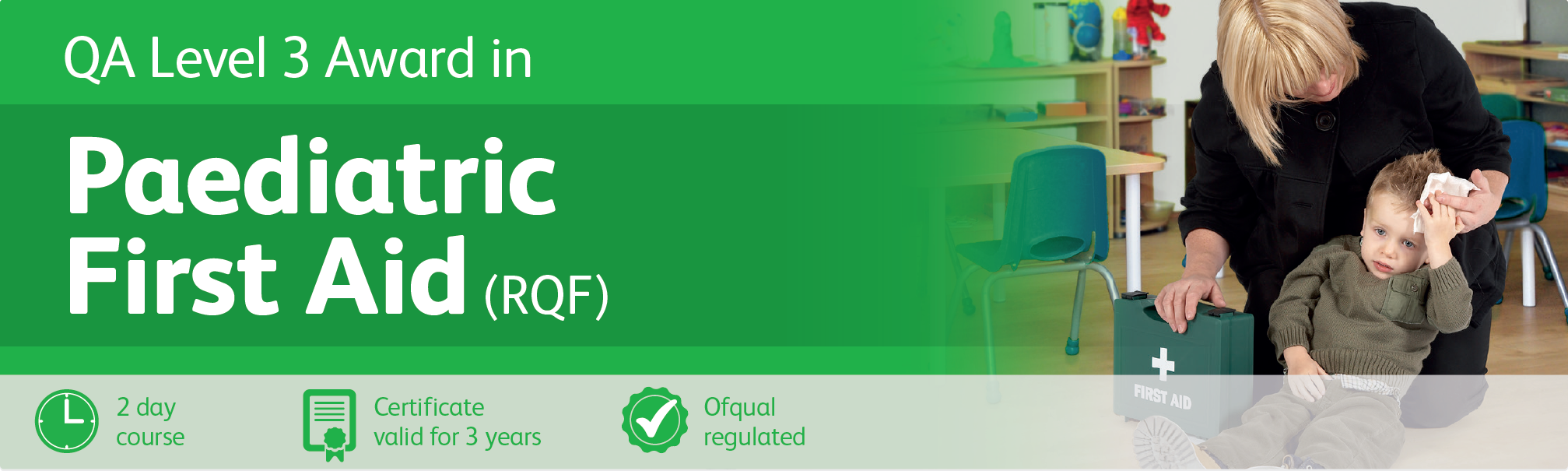
The QA Level 3 Award in Paediatric First Aid (RQF) has been specifically
designed to meet the criteria set by the Department for Education’s EYFS
Framework and is ideal for:
- Those who have gained a level 2 and/or level 3 childcare qualification
and have entered into an early years setting and wish to be included in
the staff to child ratios to comply with EYFS requirements. - Registered childminders and assistants who are required to hold a current
and full paediatric first aid certificate in order to comply with the EYFS
requirements. - Anyone who has a non-professional involvement with infants and children, such as parents, grandparents and want to learn key paediatric first aid skills.
Successful candidates will earn the roles and responsibilities of the paediatric first aider, and will be equipped with the necessary skills to administer safe and effective treatment when dealing with a range of
paediatric first aid situations.
Newly qualified entrants to an early years setting who have completed a level 2 and/or level 3 qualification on or after 30th June 2016, must also have either a full paediatric first aid or an emergency paediatric first aid certificate within three months of starting work.
What's Covered?
- The roles and responsibilities of a paediatric first aider
- Assessing an emergency situation
- Dealing with an unresponsive infant or child
- Recovery Position
- CPR and AED
- Choking
- Head, neck and back injuries
- Fractures
- Anaphylaxis and allergic reactions
- Meningitis
- Asthma
- Febrile Convulsions
- Seizures
- Diabetic Emergencies
- Poisoning
- Burns and scalds
- Electric Shock
- External Bleeding
- Hypovolaemic Shock
- Eye, ear and nose conditions
- Bites and stings
- Minor Injuries
- Treatment for hot and cold body temperatures
Reviews
“All round excellent.. delivery superb, knowledgeable, approachable, interesting and fun!”
NN

Swinford Church of England Primary school
“super course – great balance of information and practical”
RC
Swinford Church of England Primary school
“Dianne kept the group engaged throughout and made the learning experience enjoyable”
RB
Swinford Church of England Primary school
“really enjoyed the training – fun, lively”
SH
Open course, Derbyshire Primary Schools
“the training was fantastic, delivered very well. The best first aid course I’ve ever been on”
LW
